When a brand stamps "made in France" on a product, what does it actually mean? The answer is more complicated than you'd think. Between the legal framework (flexible), the certifications (many), the grey areas (vast), and the brands that genuinely walk the talk (rarer than you'd expect), there's a whole world to navigate. Here's our guide, built on the 128 brands in our directory that claim French manufacturing.
A knife for €15, a Dutch oven for €300, a bicycle for €2,000. Twelve objects of exceptional quality, all featured in our guide, where buying well costs less than buying again and again.
There’s a corner of the internet where nobody talks about sales, deals, or the latest trendy gadget. On r/BuyItForLife, a subreddit with over two million subscribers, people share photos of things that last. A 25-year-old backpack still in perfect shape. A pair of boots resoled four times. A cast iron pot inherited from a grandmother. The principle fits into four letters: BIFL. Buy It For Life. Buy once, keep forever.
This isn’t an article about minimalism. Nor about ecology, though both benefit. It’s an article about quality. About that very particular pleasure of using an object that ages better than you do. That develops a patina instead of falling apart. That tells a story instead of ending up in a bin bag.
Here are 12 objects, 12 categories, all featured in the sulkowski.fr guide. From a €15 knife to a €2,000 bicycle. Proof that “buying well” doesn’t necessarily mean “buying expensive” — but always means “buying just once.”
Full grain, split, bonded: behind the word "leather" lie very different realities. Five practical steps to stop getting fooled, and the brands working with the finest leathers in the world.
You wear leather every day. Your belt, your shoes, your bag, maybe your jacket. And yet, if I asked you what separates good leather from bad, chances are you’d draw a blank. That’s not a dig. Nobody teaches us this. We’re sold “genuine leather” as though those two words were enough to guarantee anything - when it’s probably the biggest marketing trap in the luxury industry.
The problem is that leather has become a catch-all word. It describes both a full-grain hide tanned for six weeks in a Tuscan workshop and the pulp of offcuts glued with polyurethane that you find in 400-euro sofas. Technically, both are allowed to call themselves “leather.” Legally, it’s more nuanced. But in the consumer’s mind, it’s total confusion.
This article is here to fix that. Not with hollow generalities or tanner jargon, but with concrete information and five simple steps you can put into practice on your very next purchase. The kind of knowledge you normally acquire after years of handling, comparing, and sometimes getting burned.
From Milan to Heidelberg, a portrait of the families and enthusiasts still building the world finest espresso machines. With a technical glossary and a buying guide by budget.
There is a moment, in the morning, when everything stops. The water heats up. The grinder turns. The powder falls into the portafilter, fine and even. You tamp, you lock in, and for twenty-five seconds, a thin stream of brown coffee flows into the cup, topped with a golden crema that will vanish before you’ve finished looking at it.
Espresso is a ritual of pressure and precision. Nine bars push water at 93 degrees through a puck of finely ground coffee. Too fast, and it’s acidic and hollow. Too slow, and it’s bitter and dry. The sweet spot comes down to the gram on the dose, the degree on the temperature, the tenth of a second on extraction time. What looks simple is in reality one of the most demanding gestures in everyday cooking.
And behind that gesture, there are machines. Real ones. Built by families, engineers, and enthusiasts who have been making the same object for decades. This guide is their portrait. Thirteen brands, from Milan to Heidelberg, from Florence to a British garage. And a buying guide to find the machine that fits you.
Since 1921, the British brand has been re-waxing, repairing, and reselling its own jackets. A business model built on longevity.
60,000 jackets re-waxed every year. A century-old repair programme. And revenue up 9%. Barbour proves you can make money by making things last.
There is a smell in the Simonside factory, in South Shields. A blend of waxed cotton, warm paraffin, and damp earth embedded in the seams. It is the smell of 60,000 jackets that come back every year to be re-waxed. Not thrown away. Not replaced. Sent home.
Barbour does not just make jackets. Barbour takes them back.
80 brazers, an unchanged fold and a brass coin. The English folding bike celebrates half a century without yielding an inch to automation.
Fifty years after the first South Kensington prototype, every Brompton frame is still hand-brazed by one of 80 craftspeople in Greenford. One million bikes sold, 20 million possible configurations, and still not a single robot on the brazing line.
There is a sound in the Greenford factory, in northwest London. The crackle of molten brass on steel tubes. Not the sharp snap of robotic welding. Brazing at Brompton is done by hand. Every frame. Since 1975.
Eighty craftspeople know how to do this. Eighteen months of training for each one. When one of them finishes a frame, they stamp their personal mark on it - like a potter signing their piece. For the fiftieth anniversary, Brompton struck a brass token - the Brazer’s Coin - engraved with the initials of 52 brazers, those who forged the brand’s history. The signature of the person who put their hands on it.
In Saint-Héand, 400 people assemble the lenses that filmed the Moon, Scorsese, and the latest Oscar winner.
A village of 4,000 inhabitants, an unassuming factory, and the most coveted zoom lenses in world cinema. The story of Angénieux, the French manufacturer that Hollywood cannot replace.
Saint-Héand, Loire. Population 4,000, a small town nestled against the Monts du Forez, somewhere between Saint-Étienne and the clouds. Nothing suggests that here, behind the walls of a factory with no flashy signage, they make the eyes of world cinema.
Angénieux lenses. The ones that filmed the first steps on the Moon. The ones Scorsese mounted on his cameras for The Irishman. The ones used on the sets of Emily in Paris as well as on the most demanding arthouse shoots. Steel and glass cylinders, assembled by hand, sold for between 10,000 and 100,000 euros each.
A pair of Red Wing cost 280 dollars in 2015. Today, they cost 350. Breaking down the price of a boot means understanding what you are really paying for.
I remember the exact price of my first pair of Red Wing Iron Rangers. 280 dollars. It was 2015. I hesitated for two weeks before buying them. Nearly three hundred dollars for boots felt like a lot.
The same pair costs around 350 dollars today. A twenty-five percent increase in ten years.
An Alden Indy went from 500 to 750 dollars. Viberg, from 700 to over 900. Across the heritage segment, price tags have been climbing steadily. And the same question keeps coming up among enthusiasts: what justifies this?
France grows 60% of the world's flax but exports 80% of its raw fiber. The story of Safilin, the last spinning mill in Hauts-de-France, closed in 2025 after a two-year reprieve.
On September 22, 2025, twenty-three employees switched off the machines at the Safilin spinning mill in Béthune. Three years after its high-profile reopening, the last linen spinning mill in Hauts-de-France closed its doors. No buyer, no plan B. Just a polite press release, subsidies to repay, and a reality nobody wants to spell out: France, the world’s leading flax producer, is incapable of processing its own fiber.
This is not an industrial accident. It is a structural admission of failure.
On January 1, 2024, a magnitude 7.6 earthquake damaged over 90% of Wajima's lacquerware workshops. Two years later, artisans are rebuilding with Shigeru Ban, creating kintsugi pieces from fragments, and a miraculously intact lacquered globe has become a symbol of rebirth at Expo Osaka.
On January 1, 2024, at 4:10 PM local time, the Noto Peninsula shook. Magnitude 7.6. The epicenter was thirty kilometers from Wajima, a small city of 23,000 inhabitants on the northern coast of the Sea of Japan. In seconds, walls four centuries old collapsed. Kilns toppled. Hundreds of pieces in the process of drying, some after their twentieth coat of lacquer, shattered on the floor. The Asaichi, the centuries-old morning market, burned in the fire that followed. That day, Wajima didn’t just lose buildings. It lost hands, tools, gestures.
1.7 million repairs and one question: are we relearning how to repair?
The bonus réparation is two years old. Cobblers are no longer vanishing. But buying things that can be repaired is still a political act.
Last week, I dropped off a pair of J.M. Weston at my cobbler’s. Soles worn down to the welt, collapsed heels, leather scarred by three years of Parisian sidewalks. The verdict came in fifteen seconds: full resole, patina touch-up, reshaping. A hundred and eighty euros. Three weeks’ wait. And twenty-five euros knocked off automatically through the bonus réparation.
Twenty-five euros. It’s nothing. And it’s everything.
In Bagru and Sanganer, teak block printing holds its ground against digital printers. A comparison.
Chhipa artisans have been printing with carved wooden blocks since the 17th century. Digital printing produces in minutes what they make in days. A comparison of cost, quality, durability, and why some fashion houses are coming back to the block.
In Bagru, thirty kilometres from Jaipur, a man dips a hand-carved teak block into a vat of indigo dye. He places it on cotton fabric stretched across the ground, strikes twice with the flat of his palm, lifts the block, repositions it one centimetre further, and starts again. He will repeat this gesture eight thousand times today. His father did the same. His grandfather too. The digital printer installed in the Sitapura industrial park, on the other side of Jaipur, produces the same pattern in four minutes.
On the glassmakers' island, the fires have burned for centuries. Not for much longer.
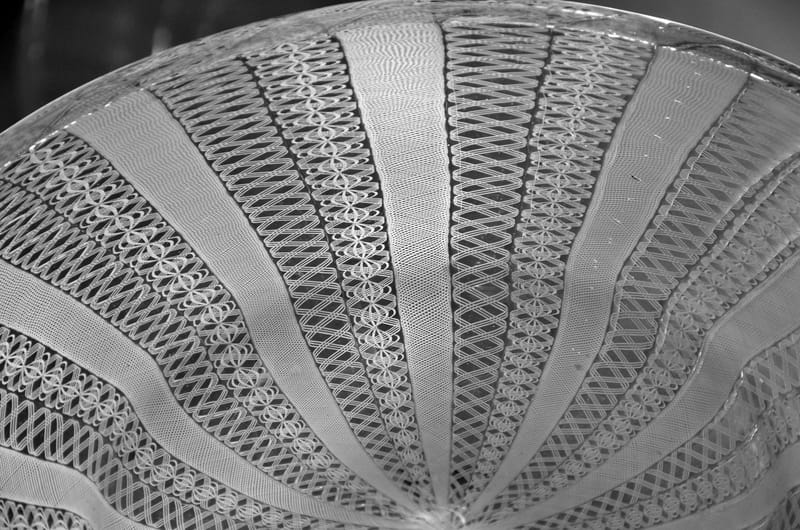
Murano has lost nearly half its furnaces in thirty years. The energy crisis, Chinese replicas, and the aging of master glassblowers threaten to extinguish a thousand-year-old craft. An investigation into an island losing its fire.
The vaporetto docks at Faro. Five minutes crossing from Fondamente Nove, and you’re on another planet. Murano looks like Venice in miniature: canals, bridges, pastel facades. But the air is different. Hotter. Heavier. It smells of heated metal, burned gas, cooled sweat. At least, it used to. Today, many chimneys no longer smoke.
The final luxury shoe workshop in Romans-sur-Isère has closed for good
On April 8, 2025, the commercial court of Romans-sur-Isère confirmed the definitive liquidation of Clergerie. Sixty workers out. A ghost Spanish buyer later, the Grenoble court of appeal annulled the sale on February 12, 2026. With that ruling, the last luxury shoe workshop in Romans disappeared. A century-old basin, 200 companies at its peak, thousands of artisans — all reduced to an appellate ruling handed down on a Thursday in February.
When the textile poverty of Tōhoku becomes artisanal haute couture
Motofumi Kogi, aka Poggy, launches Dear Boro: 12 pieces between ancestral sashiko and street culture. The survival gesture of Japanese peasants turned into a collection at $1,800 a jacket.
There’s a Japanese word for it: mottainai. The idea that waste is a kind of sin. For centuries, in northern Japan, the peasants of Tōhoku sewed, resewed and patched their clothes until no original fabric remained. Layer upon layer. Generation after generation. They called it boro — literally, “rags.”
In February 2026, Motofumi “Poggy” Kogi launched a brand that wears that word like a banner. Dear Boro. Twelve pieces. From ¥71,500 to ¥291,500. Roughly $455 to $1,856 for a garment that claims the heritage of rural patching. The paradox is dizzying. And that’s precisely what makes it interesting.
OLYMP acquires the name. The Passau plant is closing. Around 400 jobs are being lost. The know-how as well.
Eterna closes its workshops in Passau after more than 160 years of history. OLYMP acquires the brand. The artisans lose their jobs. A textbook case of "brand extraction.
In March 2026, OLYMP announced the acquisition of all Eterna brand rights. The amount of the transaction was not disclosed. Not the factory. Not the employees. Not the machines. Just the name. The Passau workshop, which has been making shirts for nearly a century, will close this summer. Approximately 400 jobs lost. The name survives, the know-how dies. Welcome to the era of “brand extraction.”
The Seattle brand completes its transformation into a platform company. The numbers are in.
In 2015, Filson manufactured 90% of its products in the United States. In 2025, it's 35%. The rest: Bangladesh, Vietnam. The last manufacturing jobs are leaving Seattle.
In Seattle, sewing machines are still running. But not for much longer.
In the historic workshop in the SoDo district, the ranks are thinning. The seamstress positions that were the pride of the house are disappearing in waves. No dramatic layoffs, no announced closure in the Seattle Times. Retirements that aren’t replaced. Positions discreetly relocated, transferred to production lines on the other side of the world. Garment manufacturing job offers have disappeared from the careers site. What remains in Seattle is the headquarters, marketing, the showroom, the photo studio. The window dressing.
The know-how, meanwhile, is taking a flight. Heading to Dacca. Heading to Ho Chi Minh-Ville.
In the Outer Hebrides, every metre of tweed is still handwoven. British law demands it.
An Act of Parliament, three mills, 140 weavers. How the Harris Tweed supply chain works, and why it changes everything.
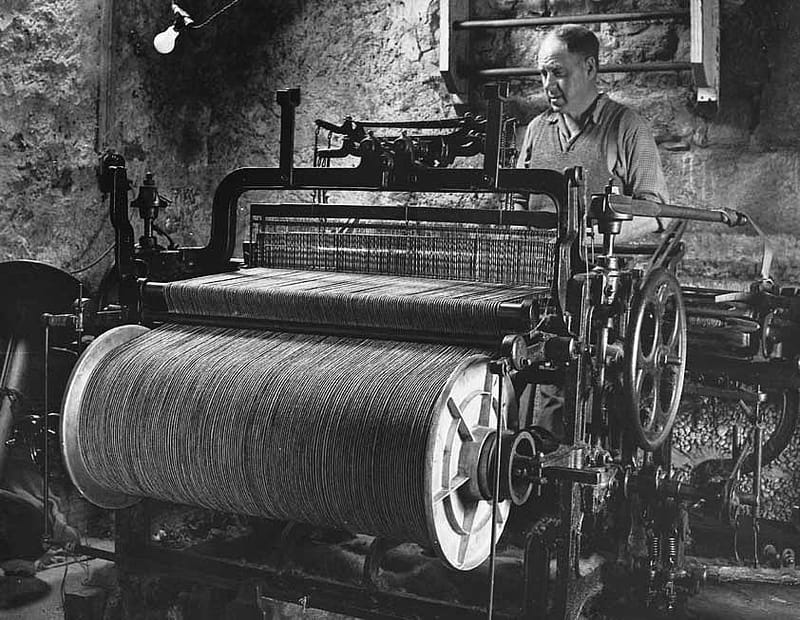
There exists a fabric that cannot be legally counterfeited. Not a label, not a designation of origin, not a simple registered logo. A law. The Harris Tweed Act of 1993 is a text passed by the British Parliament that prohibits selling under the name Harris Tweed any fabric not handwoven by a resident of the Outer Hebrides, at home, on a treadle loom.
According to the Harris Tweed Authority, it is the only fabric in the world protected by its own law.
In the 1880s, a workshop began producing knives in Miki. Only one remains.
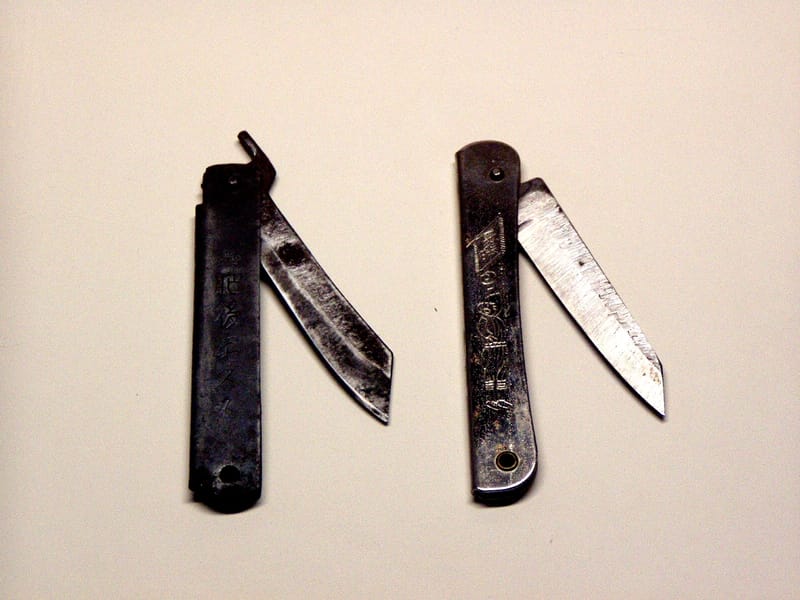
The workshop is small. Smaller than one would imagine. A long room, machines lined up against the walls, piles of cut brass on a workbench. No storefront, no showroom. Just the dry sound of metal being bent, the smell of the grinding wheel, and the hands of Mitsuo Nagao repeating the same gestures as his great-great-grandfather.
Miki, Hyogo prefecture. A city of blacksmiths since the 16th century. It is here, in this workshop, that the last authentic Higonokami in the world is born.
Four brands capture half of the market. Independents fight for scraps. Watchmaking concentration reaches a point of no return.
14.6 million watches shipped in 2025, a historic low in volume. According to the Morgan Stanley-LuxeConsult report, Rolex, Patek Philippe, Audemars Piguet, and Richard Mille capture 49% of the estimated revenue. Independents are disappearing one by one. Anatomy of a concentration.
14.6 million watches shipped in 2025, a historic low in volume. In terms of value, the market holds steady: 25.6 billion francs in exports according to the FH. But this apparent prosperity masks a brutal reality: four private houses now capture 49% of total turnover. Independents, those who keep Swiss watchmaking diversity alive, are silently fading away.
Since December 1, 2025, a European regulation protects Limoges porcelain, Solingen knives, and Murano glass in the same way champagne is protected. An investigation into a silent revolution.
The EU finally opens geographical indications to craft products. Who will benefit, who risks losing everything, and why it's a game-changer.
For decades, Europe has protected its cheeses. Its wines. Its hams. No one can sell champagne that doesn’t come from Champagne, or Parmesan that doesn’t come from Parma. Appellations of origin, protected geographical indications – a whole legal arsenal mobilized to defend agricultural products.
Meanwhile, Solingen knives could be copied by anyone. Limoges porcelain had no European-level protection. Murano glass, forged in millennial furnaces on an island in the Venetian lagoon, was freely imitated by factories that had never set foot in Italy.
That’s over. Since December 1, 2025 [1], European Regulation 2023/2411 [2] for the first time extends geographical indications to artisanal and industrial products. And this is not a bureaucratic detail. It is potentially the largest protection mechanism for manual craftsmanship ever implemented on the continent.
Our picks for the Journées Européennes des Métiers d'Art
From April 7 to 12, workshops open their doors. Here are the ones you should actually visit.
Every year in April, hundreds of workshops open their doors for a week. The JEMA (Journées Européennes des Métiers d’Art) is the only time of year you can watch an enameller at work, a blacksmith folding a blade, a wood turner finding the curve. Not on video. In person. The heat, the noise, the smell.
The twentieth edition runs from April 7 to 12, 2026, with the theme “Cœurs à l’ouvrage.” Over a thousand events across France. The problem, precisely, is the thousand. The official programme is a catalogue, not a guide. Everything’s in there, from scrapbooking workshops to a master glassblower who’s been at it for forty years. Same weight, same presentation.
What follows is a selection. Biased, unapologetic, based on what we know and what’s worth the journey. Not fifty addresses: a dozen, across different disciplines. For each one, the craft to see and the reason to go.
In Oyonnax, an eyewear manufacturer never stopped collecting. His sons now recycle his vintage acetate stocks.
Since 1964, Joël Lesca has been making glasses and hoarding them. His sons Mathieu and Bertrand turn the father's vintage acetate stocks into limited editions of 120 pieces.
In 1964, Joël Lesca started making glasses. In parallel, he collected. Frames from the 1920s. Pantos from the 1950s. Shapes nobody knew how to cut anymore. He accumulated thousands over the decades — one of the largest collections of antique eyewear in France.
That’s the story of Lesca Lunetier. Not that of an industrialist who spotted a market. That of an obsessive who made glasses with one hand and collected them with the other. For sixty years.
The master artisans of Wajima and Nishijin no longer have heirs. They have found walls.
Due to a lack of successors, Japanese *kogei* artisans are transforming hotel lobbies into works of art. Milan 2026 is their showcase.
The workshop is at the end of an alley in Wajima, Ishikawa Prefecture, far from everything. You push a sliding door and the air changes. It smells of Urushi resin, camellia oil, something earthy and soft at the same time. In the dim light, a man leans over a cypress wood panel. He applies a layer of lacquer with a brush, with a gesture so slow you might think he is not moving. Twenty coats. Thirty, sometimes. Each must dry in a humid room, at a controlled temperature, for days. Japanese lacquer does not air dry. It hardens in humidity.
This panel will not become a soup bowl. Nor a tea tray. It will go to Milan, to the lobby of a five-star hotel.
Mystery Ranch, 2000-2025: anatomy of a buyout that erases everything
Founded in Bozeman by a carrying pioneer, Mystery Ranch made the best military and outdoor packs on the market. Then a NYSE-listed conglomerate bought it. Ten months later, the name is disappearing.
Bozeman, Montana, February 2025. Seamstresses who had been assembling military backpacks for twenty years receive their termination letters. The workshop where they worked didn’t close for lack of orders. It didn’t close because the products weren’t selling. It closed because a new owner decided that the brand they brought to life no longer needed to exist.
Mystery Ranch, founded in 2000, acquired in 2024, liquidated in 2025. Twenty-five years of existence erased in ten months.
Porous, breathable, designed for fermentation. Onggi pottery has accompanied Korean cuisine for over a thousand years. Long relegated to the countryside, it is returning to Seoul kitchens and London workshops. But the masters who know how to make it can be counted on the fingers of one hand.
The clay is brown, thick, still damp. The potter rolls it between his palms, stretches it into a long coil which he spirals onto a kick wheel. No electric wheel, no mold. His hands raise the wall of a jar that will be one meter twenty high, in a single piece, without a seam. Mid-height, he strikes the exterior with a wooden paddle while his other hand, inside, holds a smooth pebble against the wall. Each strike compresses the clay, densifies it, making it both solid and porous. This gesture is a thousand years old. It is what gives onggi its unique property: the ability to breathe.
In Isère, a family still makes its soles. And refuses to sell.
Four generations of Richard-Pontvert. No funds, no group, no shortcuts. The story of a family's resistance in Isère.
There’s a smell in the Saint-Jean-de-Moirans factory. A mixture of raw leather, hot glue, and rubber. It’s the smell of hevea latex being heated to mold soles. Paraboot makes its own. Since 1927. It’s almost a minor detail, except nobody else does.
Not on this scale. Not in France. Not with natural rubber imported from Brazil.
In Morteau, about thirty artisans manufacture the only 100% French mechanical caliber.
A horse breeder, an impossible gamble, near bankruptcy, and a rebirth. The story of the only French watchmaking manufacture.
The Swiss dominate world watchmaking. Everyone knows it. Swiss watches are like champagne or parmesan: a reputation monopoly so absolute that we’ve forgotten anything else could exist.
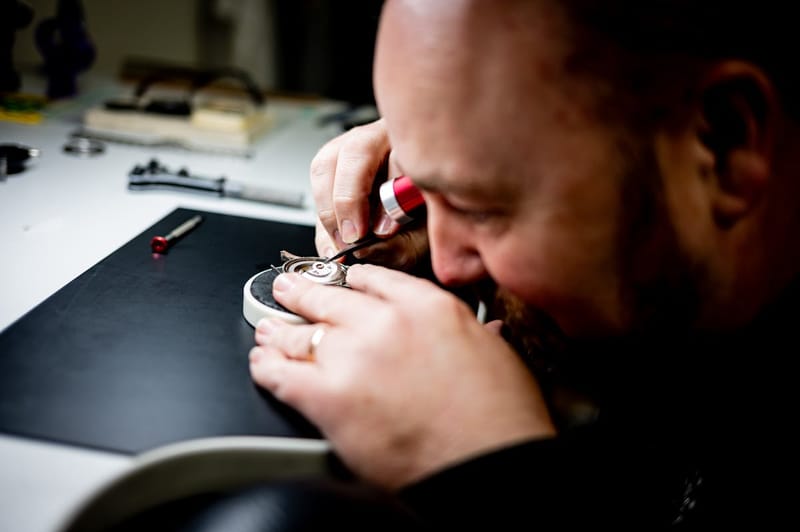
Except in Morteau, in the Haut-Doubs, twenty minutes from the Swiss border, a workshop of about thirty people manufactures the only mechanical movement entirely designed and assembled in France. Not “assembled in France with Swiss components.” Designed AND assembled. In France.
The workshop is called Pequignet. And its story is one of the most improbable in contemporary watchmaking.
Heritage Crafts has evaluated 285 British crafts. Five are already extinct. Seventy-two could follow.
A red list of endangered trades, modeled on the IUCN's red list for endangered species. The British Heritage Crafts initiative has no equivalent in France - and that's a problem.
We know how to count Bengal tigers. We know how to count blue whales, California condors, Javan rhinos. For each endangered species, there is a record, a status, a conservation plan. The IUCN has published its red list since 1964. The whole world uses it.
No one counted crafts.
Not jobs. Not economic sectors. Crafts – in the sense of transmitted gestures, embodied savoir-faire in hands, techniques that cannot be learned from a book. The kind of things that disappear silently, one retirement at a time, until the day there is no one left to show how it’s done.
Since 1927, on rue Clemenceau, the last workshop in Var has been making "tropéziennes" entirely by hand.
Three generations of Rondini, one workshop, one street. When everyone else is relocating, the last artisanal "sandale tropézienne" remains exactly where it was born.
There’s an address in Saint-Tropez you need to know. Not a restaurant, not a club, not a gallery. A workshop, rue Clemenceau . It’s there that Rondini has been making sandals since 1927 .
Not “designed in Saint-Tropez and made elsewhere.” Made. By hand. In the shop. The same one for almost a hundred years.
Saint James, an EPV-certified manufacturer since 1889, has changed hands. Does the label protect the craft?
Saint James has been knitting its striped sailor shirts in Saint-James-de-Beuvron since 1889. A listed French fashion group focused on volume retail has bought the company. What happens to a hard-earned craft model under a different industrial logic?
There is a specific sound inside a knitting workshop. Not the sharp crack of a sewing machine, but a low, steady mechanical hum. Saint James’s circular knitting machines have been running for more than a century in this corner of Normandy, where the Channel coast starts leaning toward Brittany. The building is plain and functional. No glass showroom, no gilded sign. Just a workshop.
Inside, people do what they have done for decades. Yarn goes into the machine. A garment comes out. Between those two moments, eighteen pairs of hands step in. Knitting, dyeing, cutting, assembly, linking. Every stage happens on site, in the same town of roughly 3,000 people that gave the brand its name.
Saint-James-de-Beuvron, in the Manche department, a few kilometers from Mont-Saint-Michel. Everything happens here. It always has.
Three generations of blades at the end of the world
In Niimi, a small, isolated town in Okayama, Shosui Takeda has been hand-forging knives for three generations. No Sakai, no Seki. Just a workshop, Aogami Super, and an international cult following.
Niimi is not a city of knives. No centuries-old cutlery tradition, no blacksmiths’ cooperative, no blade museum. It is a small, isolated town in Okayama Prefecture, nestled between wooded hills and rice paddies. Two blacksmiths make kitchen knives there. Two. Not two hundred like in Sakai, not fifty like in Seki. Two.
One of them is named Shosui Takeda. Third generation of a family of blacksmiths. His workshop, Takeda Hamono, has no street-front display. No online store with polished photos. The website looks like a forgotten Geocities page in an internet fold. And yet, knife enthusiasts worldwide know his name.
20% on the EU, 31% on Switzerland. Big groups absorb it. Small workshops suffocate.
The tariffs imposed by the Trump administration hit Europe at 20%, Switzerland at 31%. For knifemakers, ceramists and cobblers exporting across the Atlantic, it's a wall. An investigation into those with no room to manoeuvre.
A Thiers knifemaker exporting a €120 knife to the United States used to see a net margin of around 15%. Since April 2025, US customs duties take 20% at the border. His margin has turned negative. The knife hasn’t changed. The market has.
200 years of glass in Pas-de-Calais. Possibly the final ones.
Arc France is the last large-scale tableware glassworks in France. Two centuries of history, an entire town built around a factory, and receivership proceedings in January 2026. If Arc falls, there is no plan B.
Arques, Pas-de-Calais. Ten thousand inhabitants. A railway station, a handful of shops, a church. And a factory. Not just any factory: the largest tableware glassworks in Europe. The one that has kept the town alive for two centuries. The one without which Arques probably wouldn’t exist at all.
In January 2026, Arc France entered receivership. It isn’t the first time. It may not be the last. But this time, the question is no longer whether the company will pull through. The question is whether French tableware glassmaking will survive.
In Sakai, near Osaka, a handful of master craftsmen carry on six centuries of knife-making. A division of labour unique in the world, an imperilled succession, and the same question as in Thiers: who's still learning?
The sound is dull, regular, almost organic. A hammer on white-hot steel. Not one blow more than necessary, not one fewer. Inside the workshop, the heat is dry, immediate. The forge glows. The smith doesn’t speak. He strikes, turns the blade, strikes again. His gestures are six hundred years old.
Sakai, a city of 820,000 in Osaka prefecture, supplies 98% of the professional knives used by Japanese chefs. That figure, cited by the Sakai Tourism Bureau and echoed by specialist sources, is staggering. It means that in almost every starred kitchen in Tokyo, Osaka, or Kyoto, the blade that slices the fish, minces the ginger, or cuts tofu into translucent sheets comes from here.
In Victoria, a family workshop pushes shell cordovan to its limits
When Brett Viberg orders 3.5 mm shell cordovan from Horween, it's not marketing. It's an obsession.
The workshop sits in Victoria, at the far end of Vancouver Island. Not in a trendy neighbourhood, not in a loft with a neon logo. In an industrial building — plain, functional. You push open the door and it hits you: leather. Not the “leather” scent they put in candles. The real thing. Animal, tannin, grease. A heavy, almost oily air.
On a workbench, a hide of Horween shell cordovan. Thick as a paperback novel. Three and a half millimetres. Maybe four. Brett Viberg lifts it with one hand, bends it gently to show the grain. The hide resists, then gives way with a muted, dull sound. No cracking. Cordovan doesn’t crack. It rolls.
After 78 years of production in Haute-Savoie, Maped is closing its Argonay factory. 28 jobs lost, production moved to Asia. The Made in France of everyday objects loses another piece.
Argonay, Haute-Savoie. Three thousand inhabitants, a view of the Aravis mountains, a lake nearby. And a factory that has been making erasers and compasses since 1947. Not a spectacular factory. Not a listed site. A discreet industrial building, wedged between the mountains and the retail park, where people come every morning to make objects that everyone uses and nobody looks at.
In May 2026, this factory will close. Twenty-eight people will lose their jobs. Production will be transferred to Asia. And France will no longer have a single eraser factory on its soil.
Your plastic frames cost 5 euros to make. The rest is margin and a logo. Here’s how a single conglomerate locked down the entire chain.
I’ve worn glasses since the age of seven. I’ve bought dozens of pairs. Thin ones, thick ones, round, rectangular, expensive and not-exactly-cheap. And for a very long time, I never asked the question that should have been staring me in the face.
Between Touraine and Paris, two French framebuilders share the same gestures
Hugo Canivenc learned brazing at Cyfac. Today he builds the frames at Tamboite. And when Tamboite needs paintwork, it's Cyfac who handles it. A dual portrait of two workshops bound by the same thread.
There is a workshop in Hommes, in Touraine, inside a low building along a departmental road. There is another on rue Saint-Nicolas, in the 12th arrondissement of Paris, a stone’s throw from the Bastille. The first produces a thousand to twelve hundred frames a year. The second, a few dozen. They are not in the same business. But they make the same gesture.
What connects them is a man, a material, and a flame.
First-purchase guide — what you need to know before spending €200 on a pair of raw selvedge jeans
Japanese selvedge isn't a luxury. It's a manufacturing standard. Here's how to navigate it.
A pair of Japanese selvedge jeans costs between €170 and €400 in Europe. That’s a lot. It’s also the price of a garment that will last ten years and belong to nobody but you — literally, since the fades form according to your body, your movements, your life.
But before reaching for your wallet, you need to understand what you’re buying. That’s what this guide is for.
239 businesses flagged out of 1,499 inspected. Made in France has a sincerity problem.
A blue-white-red flag on a box of knives. Underneath, in small print: “Designed in France.” Not manufactured. Designed. The nuance is a chasm, but the flag does the heavy lifting. The customer sees the colors, pays up, and goes home convinced they bought French.
Five manufacturers to replace the shoe that no longer deserves its price
Church's isn't what it used to be. Here are the Northampton houses that still deserve your money.
Let’s be honest. Church’s, in 2026, is finished.
Not the brand. The brand exists. It has shops, a website, advertising. But the very thing that justified Church’s existence — an English shoe made in Northampton from real leather, at a price warranted by 250 stages of production — that’s been over for a long time.
Since 1999, to be precise. The year Prada acquired the house for £170 million. Since then, prices have soared. A Consul now exceeds €700. And the leather? On many models, it’s “Polished Binder” — corrected grain coated in plastic resin. Plastic, at the price of leather. The specialist forums aren’t fooled. The verdict is unanimous.
Thiers was once the world capital of cutlery. It nearly died. Today, a new generation of knifemakers is firing up the engines again. Not out of nostalgia, but out of conviction.
The town clings to a hillside above the Durolle river. Rooftops stack upon each other, narrow lanes drop steeply toward the water. In winter, fog rises from the valley and wraps around the workshops. In summer, you can hear the grinding wheels from the street.
Thiers, Puy-de-Dôme, population 11,000. France’s cutlery capital since the fifteenth century. If you have a knife in a drawer somewhere, there’s a good chance it came from here.
Vidalia Mills closed in 2025, eight years after Cone Mills White Oak. Selvedge has never been more popular. But American selvedge is dead.
There’s something cruel about the timeline.
In 2017, Cone Mills shut down its White Oak plant in Greensboro, North Carolina. The last great American selvedge mill, the one that had supplied Levi’s for decades, turned off its shuttle looms. Denim enthusiasts mourned online. They bought up the final yardage like holy relics. Then they moved on.
Twenty years after its launch, what does the EPV label really guarantee?
1,300 certified companies, with a public target of 2,500. EPV is a useful signal, not a guarantee. This guide does the filtering the label cannot do by itself.
For a long time, I believed the EPV label was enough.
Entreprise du Patrimoine Vivant. The name sounds self-evident: if the French state recognizes you as a holder of living heritage, your craft must be rare, your products excellent, your standards serious. That is what I thought. Then I looked at the list.
1,300 companies. Foundries, leather workshops, glassblowers, charcutiers, umbrella makers, painting restorers. So far, no surprise. But also printers, caterers, illuminated-sign manufacturers, industrial cleaning firms. The scope is broader than most people think. Much broader.
Kapital: Japanese textile craft versus French capital
Toshikiyo Hirata spent forty years turning denim into textile art in Kojima. A few months after his death, a fund backed by the world’s largest luxury group acquired his brand. Monozukuri versus scaling.
Kojima is not a quaint village. It’s a small industrial town in Okayama Prefecture, wedged between hills and the Seto Inland Sea, where the air smells of salt and indigo. “Denim Street” - Jeans Street to the tourists - is a three-hundred-meter lane lined with tiny shops. Rolls of selvedge fabric stacked behind narrow windows. Shuttle looms you can hear clacking from the sidewalk. Artisans dyeing by hand in vats of natural indigo, arms blue to the elbows.
This is where Japanese denim was born. Not Tokyo, not Osaka. Kojima, in the weaving workshops that used to make school uniforms before discovering American jeans in the 1960s. The fabric changed. The craft stayed.
There are still people who make things with care. This guide is for them, and for those looking for them.
I’ve always wanted to publish a guide.
A real guide, on paper. In the tradition of Baedeker, Michelin, those objects you leaf through, annotate, slip into a coat pocket (and which I have the questionable taste of collecting). A beautiful object in itself, listing the brands worth knowing: the ones whose products last, whose story holds up, whose prices bear some relation to what you’re actually buying.
The paper guide is a dream of mine. The web is the laboratory. A fast testing ground where you build, correct, expand before committing anything to ink. The notes piled up, the spreadsheet grew, and the need has never been more urgent.